


Search Engine Rankings Brisbane: Tim Nelson’s 12-Step Local SEO Playbook to Dominate Maps & Organic Results
If boosting search engine rankings brisbane is on your to-do list this quarter, you’re in the right place. Brisbane locals search with strong intent, and when they find you in Google Maps and the first page, they call, click and visit. The challenge is that most businesses don’t have a simple, reliable process to climb into those spots and stay there. That’s why I’m sharing Tim Nelson’s practical 12-step local search engine optimisation (SEO) playbook, refined through years of local experience in Brisbane.
Here’s the promise: follow these steps and you’ll build the foundations, content and signals that earn trust from both people and algorithms. You’ll know exactly what to do each week, and how to prove it’s working with clear performance reporting (traffic, rankings, ROI). Expect real-world tips, examples from suburbs like Newstead and West End, and honest guidance on what actually moves the needle. No fluff, just what gets results here in Brisbane.
As the Tim Nelson Agency, we specialise in data-informed strategy, comprehensive site audits, on-page and off-page optimisation, and training that upskills your team. We’ll map issues, prioritise fixes, and implement a customised roadmap aligned to your business goals. And yes, you’ll see the impact in traffic, calls, form fills and revenue, because every tactic we recommend is measurable and geared to your bottom line.
Prerequisites and Tools
Before you dive in, make sure you’ve got access, clarity and a simple workspace. This ensures your work compounds and your team stays aligned from day one.
- Access to Google Business Profile (GBP) and ownership verification.
- Access to Google Analytics 4 and Google Search Console.
- Admin access to your content management system (CMS).
- A single source of truth spreadsheet for actions, owners, due dates and status.
- Primary business details finalised: name, address, phone and website (URL).
- A standardised way to track leads: phone log, contact form database, and labelled UTM parameters on links.
| Tool | Primary Use | Why It Matters | Cost |
|---|---|---|---|
| Google Business Profile | Maps visibility, reviews, Posts, Products/Services | Directly influences local pack placement and calls | Free |
| Google Analytics 4 | Traffic, conversion tracking, attribution | Proves impact on return on investment | Free |
| Google Search Console | Indexing, queries, technical insights | Shows what Google sees and where to fix | Free |
| PageSpeed Insights | Performance diagnostics | Improves experience and rankings signals | Free |
| LocalCitation services or manual directory management | Consistent citations across trusted directories | Reinforces credibility and local relevance | Free to Low |
Step 1: Set Your Baseline, Goals and Simple Measurement
Kick off with a baseline, targets and a way to measure progress every week. In Google Analytics 4, set up conversion events for calls, form submissions, bookings and key page engagements. In Google Search Console, export current queries, impressions, click-through rate (CTR) and average position for your core service and Brisbane suburb terms. This gives you a clear before-and-after view.
Capture Google Business Profile insights, including calls, website clicks, direction requests and message volume. Add UTM parameters to your Google Business Profile website link to separate profile-driven traffic inside Google Analytics 4. Finally, define outcome targets such as more calls, appointment growth, and return on investment uplift, not just better positions. When you know what success looks like, every next step becomes obvious.
Step 2: Fix Technical Health and Core Web Vitals
Local rankings fall apart if your website loads slowly, breaks on mobile or blocks indexing. Run your pages through PageSpeed Insights to tighten largest contentful paint, interaction delays and visual stability. Ensure your site is mobile-first and fast, with compressed images, lazy loading and server-side caching. Remove redirect chains, fix broken links and standardise your canonical URL patterns to avoid duplication.
Next, ship the essentials that help Google crawl and index with confidence: an XML sitemap submitted in Google Search Console, sensible robots.txt rules, and clear internal linking from your homepage to services and location pages. If your business has multiple locations, build a location landing page per office with full details and a map embed. Technical health doesn’t need to be glamorous; it just needs to be tight.
Step 3: Optimise Your Google Business Profile for Local Wins
Your Google Business Profile is the beating heart of local discovery. Choose the most precise primary category, then add secondary categories that support your services. Fill in services with descriptions, add products if relevant, and write a benefit-led business description with your unique selling points. Keep hours accurate, add holiday updates, and turn on messaging if you can reply quickly.
Upload authentic photos of your team, premises and work, and refresh them monthly. Use Google Posts weekly for timely offers, events or tips that link back to your site with UTM parameters. Add an appointment link if bookings matter, and answer your own questions in the Questions and Answers section. The more complete and helpful your profile, the more Google trusts you to serve local searchers.
Step 4: Make Your Name, Address and Phone Consistent and Build High-Trust Citations
Inconsistent business details erode trust and can limit visibility. Standardise your exact business name, address and phone across your website, Google Business Profile and top directories. Use the same punctuation, spacing and phone format everywhere. Start with authoritative Australian directories, then expand into niche sites relevant to your industry.
| Directory | URL | Notes |
|---|---|---|
| Apple Business Connect | https://businessconnect.apple.com | Adds visibility on Apple Maps used by many iPhone users |
| Bing Places | https://www.bingplaces.com | Broad coverage across Microsoft properties |
| Australian Business Register | https://abr.business.gov.au | Ensure your details match your Australian Business Number entry |
| Yellow Pages | https://www.yellowpages.com.au | Long-standing local reference; ensure completeness |
| TrueLocal | https://www.truelocal.com.au | Local reviews and directory presence |
| Hotfrog Australia | https://www.hotfrog.com.au | Basic citation with category placement |
| LocalSearch | https://www.localsearch.com.au | Regional reach; good for Queensland presence |
Log every citation with status, URL and login credentials. Once you’re consistent, you rarely need to revisit these, but they set a credibility foundation that supports everything else you do.
Step 5: Do Brisbane-Focused Keyword Research That Reflects Real Intent
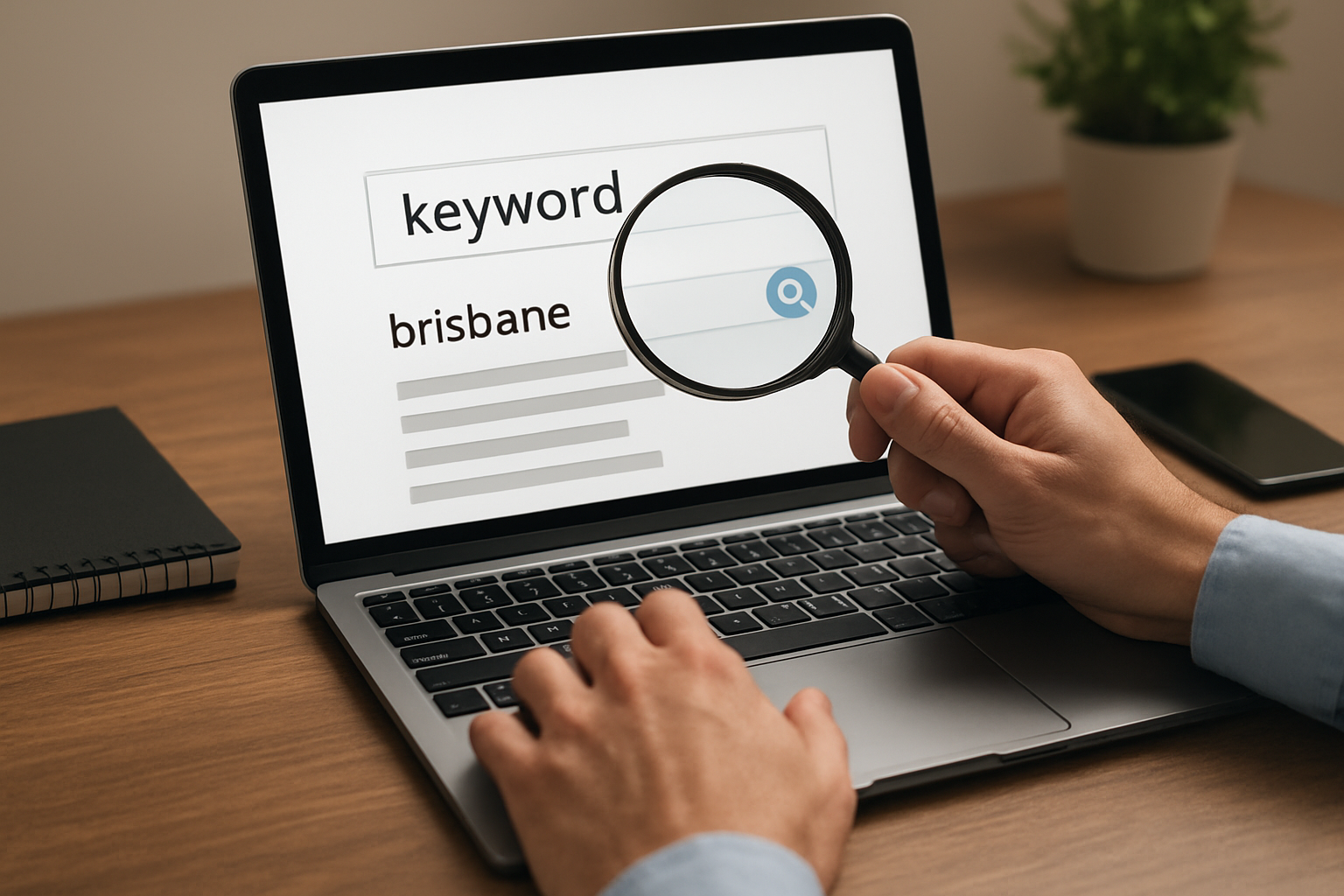
Local customers don’t just search for a service; they search for context. Map out your services against Brisbane suburbs and intent types. Start with Google’s autocomplete, People Also Ask, and your own Google Search Console queries. Shortlist head terms like “plumber Brisbane” and “family lawyer Brisbane”, plus suburb pairs like “electrician Bulimba” and “café New Farm”, and “near me” variants people use on mobile.
| Intent Type | Example Keyword | Suggested Page Type |
|---|---|---|
| Transactional | “emergency plumber Brisbane” | Service page with urgent call-out messaging |
| Local-Commercial | “dentist West End” | Location landing page with directions and hours |
| Informational | “how to choose a physio Brisbane” | Educational blog with internal links to services |
| Near Me | “best sushi near me” | Optimised Google Business Profile and menu page |
Prioritise terms by potential value: distance-based services, high-margin offers and seasonality. Then align each priority term to a specific page and ensure there’s one clear target per page. This prevents cannibalisation and clarifies what each page should rank for.
Step 6: Build and Optimise Service and Location Pages
Give every core service its own page, and create location variants where it genuinely helps users. Use benefit-led headlines, clear subheadings, answers to common questions and clear calls to action. Include your Brisbane suburbs served, embedded map, and structured contact details in the footer. Keep it human: show outcomes, proof and pricing ranges where possible.
In your meta title and heading, combine service and location naturally, like “Family Lawyer in Brisbane” or “Solar Installations in North Brisbane”. Add internal links from your homepage, blog and related services to strengthen discoverability. And avoid thin duplication across suburb pages; instead, reference local landmarks, transport options and neighbourhood specifics to make each page truly local.
Step 7: Publish Content That Proves Expertise and Local Relevance
Content fuels both organic rankings and Google Business Profile engagement. Plan a monthly rhythm: one deep service explainer, one Brisbane-focused guide, and one case study. Think “A Homeowner’s Guide to Solar Rebates in Brisbane” or “What to Check Before Leasing a Retail Space in Fortitude Valley”. Feature real stories, photos, testimonials and outcomes to demonstrate experience, expertise, authoritativeness and trustworthiness.
Add frequently asked questions at the bottom of key pages, then answer them concisely in natural language. Internally link from these guides to the most relevant service pages. Over time, this builds topic authority, giving Google confidence that your site is the best result for searches in your space.
Step 8: Add Structured Data to Help Machines Understand Your Business
Structured data gives search engines machine-readable context. Mark up your business with the LocalBusiness and relevant subtype, including name, address, phone, opening hours, geo coordinates, and links to your social profiles. Add Service markup on service pages and use review markup where you have genuine first-party reviews. On educational content, mark up how-to and article elements where appropriate.
Structured data won’t replace great content, but it strengthens how your information appears in the search engine results page (SERP) and can improve click-through rate (CTR). Validate with Google’s Rich Results Test and keep it updated as your details change. It’s a small effort with compounding dividends.
Step 9: Earn Local Links and Mentions Through Real-World Involvement
Local authority often comes from community involvement. Sponsor a junior sport team, collaborate with a neighbourhood association, or support a charity event and ask for a website mention. Build supplier and partner pages highlighting who you work with and request a reciprocal mention on their sites. Share local research or data-backed insights and pitch them to Brisbane media through journalist request platforms like SourceBottle.
When you do outreach, lead with value: a donation, a helpful guide, a quote or a story. Keep a simple tracker for prospects, status and outcomes. These links and mentions build trust, drive referral traffic and reinforce your prominence in the Brisbane ecosystem.
Step 10: Systemise Reviews and Reputation Management

Reviews are the lifeblood of local trust and Map visibility. Ask consistently and make it easy: send a review link via text after service, add a short link to invoices, and use a small table sign with a QR code in-store. Respond to every review with warmth and specifics, reflecting your brand tone. Address negative feedback quickly and show what you’ve changed.
Feature review snippets on key pages and consider adding vertical-specific trust badges where appropriate. Never offer incentives for reviews; ask for honest feedback instead. Over time, steady growth in review count and quality signals reliability to both people and algorithms.
Step 11: Improve On-Site Experience and Conversion Flow
Local search engine optimisation thrives when your website converts. Make your phone number and booking button sticky on mobile. Offer multiple contact options: call, form, chat and calendar booking if relevant. Use social proof near calls to action and answer objections in-line with concise frequently asked questions. Shorten forms to the essentials and clarify what happens next, including response times.
Measure micro-conversions like brochure downloads or price guide views, because these often precede an enquiry. Upgrade thank you pages to suggest the next step and track them in Google Analytics 4. Remember, more conversions at the same traffic level equals better return on investment, and better signals that can further support your rankings.
Step 12: Measure and Report Your search engine rankings brisbane Performance
What gets measured gets improved. Track a small, focused set of metrics weekly and monthly: Google Business Profile calls and clicks, website enquiries, service page traffic, and key rankings for your target service plus location terms. Pair this with qualitative notes, like which suburbs or services are gaining momentum. Reporting should tell a simple story: what moved, why it moved, and what you’ll do next.
| Metric | Where to Measure | Why It Matters | Cadence |
|---|---|---|---|
| Calls, direction requests, website clicks | Google Business Profile Insights | Directly tied to local intent and action | Weekly |
| Service + suburb rankings | Manual checks or trusted rank tracking tools | Shows visibility improvements across Brisbane | Weekly |
| Service page sessions and enquiries | Google Analytics 4 | Links visibility to real outcomes | Monthly |
| Query impressions and click-through rate | Google Search Console | Reveals emerging keywords and content gaps | Monthly |
At Tim Nelson Agency, we provide clear performance reporting (traffic, rankings, ROI), combining dashboards with plain English insights and next-step priorities. The goal isn’t just higher positions; it’s profitable, sustainable growth you can see and explain. When your reporting is this clear, your entire team rallies around what works and drops what doesn’t.
Common Mistakes to Avoid
Local success is often about avoiding unforced errors. Here are pitfalls we see frequently in Brisbane and how to sidestep them.
- Incomplete Google Business Profile: missing categories, thin descriptions, no Posts or outdated hours.
- Thin service pages: too little copy, no local cues, and no clear calls to action.
- Duplicate suburb pages: templated content that adds no value and risks being ignored.
- Inconsistent name, address and phone: small differences that muddy trust signals.
- No tracking: guessing instead of measuring enquiries, calls and revenue.
- One-off bursts: doing everything in a week, then nothing for months.
| Myth | Reality | Fix |
|---|---|---|
| “If I add suburb pages, I’ll rank everywhere.” | Proximity, relevance and prominence matter more than volume. | Create genuine local value and strengthen your Google Business Profile. |
| “Photos need hidden geo-tags to help.” | Authenticity and freshness beat metadata gimmicks. | Post real photos regularly with relevant captions. |
| “Reviews take care of themselves.” | Consistent asks get consistent results. | Embed a simple, ethical review request into your process. |
| “Ranking is the goal.” | Revenue and return on investment are the goal. | Track calls, bookings and sales, not just positions. |
Why Tim Nelson Agency Fits This Work
Many businesses struggle to achieve prominent positions and lack a tailored, data-driven approach. Tim Nelson Agency provides comprehensive site audits, on-page and off-page optimisation, and a customised roadmap aligned to your goals. We train your team on best practices, build content that earns trust, and secure mentions that signal authority. Most importantly, we show you the numbers that matter and what to do next.
From local to national and international campaigns, we’ve learnt what scales and what stays local-only. The method is simple: identify issues, prioritise high-impact fixes, implement, measure and iterate. That’s how you dominate Maps and organic results sustainably across Brisbane’s diverse suburbs.
Wrap-Up
This 12-step playbook gives you a practical path to stronger Google Maps placement and first-page organic results across Brisbane. Each step compounds the next, creating a flywheel of visibility, trust and conversions.
Imagine the next 12 months with service pages that convert, a Google Business Profile that shines, and reporting that proves every win to your team and stakeholders. Momentum feels different when the plan is clear.
Ready to turn this into a simple weekly routine and elevate your search engine rankings brisbane across the suburbs that matter most?
Elevate Search Engine Rankings Brisbane with Tim Nelson Agency
Tim Nelson Agency delivers comprehensive strategy from technical fixes to personalised optimisation, with clear performance reporting (traffic, rankings, ROI) for Brisbane growth.